
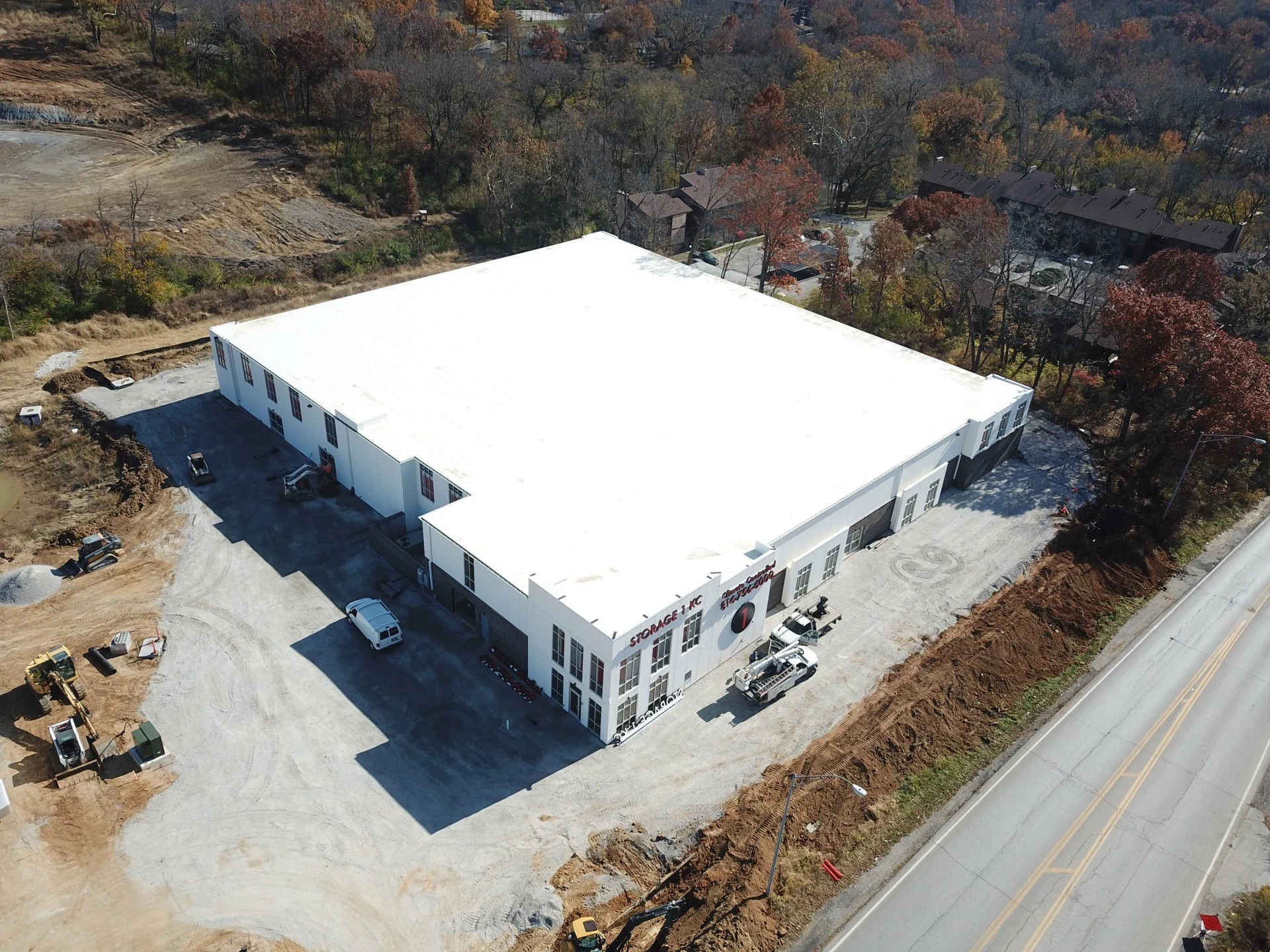
TPO 60-Mil Roofing in Fayetteville, NC
60-mil TPO membrane specs for Fayetteville commercial roofs: seam welding, wind uplift near Fort Liberty, and drainage against pine debris.
TPO 60-Mil Roofing in Fayetteville, NC
60-mil TPO membrane specs for Fayetteville commercial roofs: seam welding, wind uplift near Fort Liberty, and drainage against pine debris.
60-Mil TPO for the Fort Liberty Retail and Medical Belt
Sixty-mil TPO is the membrane we spec most often on standard commercial reroofs around Fayetteville - strip retail on Skibo Road, medical offices near Cape Fear Valley, hotels along Bragg Boulevard. It's the workhorse thickness: thick enough to survive foot traffic and hail, thin enough to keep a reroof budget realistic for owners who don't need the extra membrane mass of an 80-mil system.
What 60-Mil Actually Gets You
TPO membrane is a thermoplastic polyolefin sheet reinforced with a polyester scrim, and the 60-mil designation refers to overall thickness rather than the top ply alone. That scrim is what resists tear-through when a service tech drags a ladder across the field or an HVAC contractor sets a unit down without a protection board. At 60 mils you get enough material over the reinforcement to handle normal wear without the membrane thinning out at high-traffic zones within the first five years.
Seams are hot-air welded, not glued or taped. A properly welded TPO seam is a homogeneous bond - the two sheets fuse into one piece of plastic rather than staying two sheets held together by adhesive. That matters in a climate where the membrane goes through wide daily temperature swings; welded seams move with the sheet instead of peeling at the edge the way some older seam technologies did.
Seam Integrity and Wind Uplift Along the Sandhills
Fayetteville doesn't take direct hurricane landfalls, but it sits close enough to the coast that remnant systems still arrive with sustained wind and days of rain - Matthew and Florence both proved that inland doesn't mean sheltered. Wind uplift resistance on a TPO roof comes from three things working together: the fastening pattern in the field, the enhanced fastening at corners and perimeter, and seam strength holding the sheets to each other once wind gets under an edge.
We design fastening density off the building's actual wind zone, roof height, and parapet condition rather than defaulting to a generic pattern. A single-story retail box on Owen Drive with a low parapet doesn't need the same corner fastening as a taller medical office building exposed on three sides near open parking. Getting that calculation wrong is the single biggest cause of TPO blow-offs we see after a remnant storm passes through.
Heat, Humidity, and Membrane Color
White TPO reflects a meaningful share of solar radiation compared to a dark membrane, which keeps rooftop equipment and the deck itself running cooler through a Sandhills summer where heat and humidity both stay high well into September. Lower surface temperatures slow the rate of thermal expansion and contraction the membrane goes through daily, which in turn reduces long-term stress on seams and flashings.
Humidity is the other half of the equation. TPO doesn't absorb moisture the way some fleece-back systems can if a seam fails, but standing water anywhere on the field still needs a way off the roof before algae and grime start building on the membrane surface. That's a drainage design question as much as a membrane question.
Pine Straw, Needles, and Keeping Drains Clear
Longleaf pine is everywhere in this region, and pine straw, needles, and cones land on every low-slope roof within reach of a tree line - which in Fayetteville is most of them. Debris collects at drains, scuppers, and low points in the field faster here than it does in a lot of markets we work in. A 60-mil TPO roof handles that fine as a membrane, but the drainage hardware around it needs regular attention or you end up with ponding that outlasts the membrane's own service life expectations.
Sizing and placement matter too. On several reroofs we've added a secondary overflow scupper or repositioned a drain a few feet from where pine litter naturally piles up against a parapet wall, which cuts down on how often maintenance crews need to clear debris by hand.
Common 60-Mil Applications We See
- Single-tenant retail boxes and strip centers along Skibo Road and Yadkin Road
- Medical office buildings and outpatient clinics near the Cape Fear Valley campus
- Limited-service hotels along Bragg Boulevard and the I-95 corridor
- Self-storage facilities with simple roof geometry and low equipment loads
- Government and county office buildings with standard occupancy schedules
- Fast-food and quick-service restaurant standalone buildings
Installing Without Shutting the Building Down
Almost none of these buildings can close for a reroof, so the tear-off gets phased in sections small enough to dry in and finish before end of shift - never leaving an open deck overnight if we can help it, and never leaving a hotel guest floor or clinic waiting room under an active work zone longer than a day. Crane and material staging get planned around the parking lot's actual traffic pattern instead of wherever it's convenient to drop a load.
On buildings with rooftop mechanical serving occupied space below, we sequence work around which unit feeds which zone, so nobody loses conditioned air over a exam room or a guest wing mid-August. It adds coordination time up front, but it's cheaper than a tenant complaint or a canceled appointment.
Questions We Get on 60-Mil TPO
Is 60-mil thick enough for a roof with regular foot traffic?
For routine maintenance access and occasional service calls, yes. If the roof sees daily foot traffic from tenant use or houses walk-pad-worthy equipment routes, we usually recommend walkway pads at those specific zones rather than upgrading the whole field to 80-mil.
How does 60-mil TPO compare to EPDM for wind resistance?
Both can be engineered to meet the same wind uplift rating - it comes down to fastening pattern and seam method more than raw membrane thickness. The practical difference is welded TPO seams versus taped or adhered EPDM seams, and how each ages under UV and thermal cycling.
Will pine sap or resin damage the membrane?
TPO's surface resists most sap staining better than some coated systems, but sap that accumulates and isn't cleaned can trap grit and slow drainage locally. It's a housekeeping issue more than a membrane failure risk.
Can 60-mil TPO go over an existing roof instead of a full tear-off?
Sometimes, if the existing insulation is dry and the deck is sound - we evaluate that with core cuts before recommending a recover over a full tear-off. A recover isn't always cheaper once you account for code-driven insulation upgrades.
What warranty terms come with 60-mil TPO?
Manufacturers offer a range of material and system warranty terms depending on membrane thickness, attachment method, and whether the installer is enrolled in their contractor program. We walk owners through the actual options at proposal stage rather than quoting a blanket number up front.