
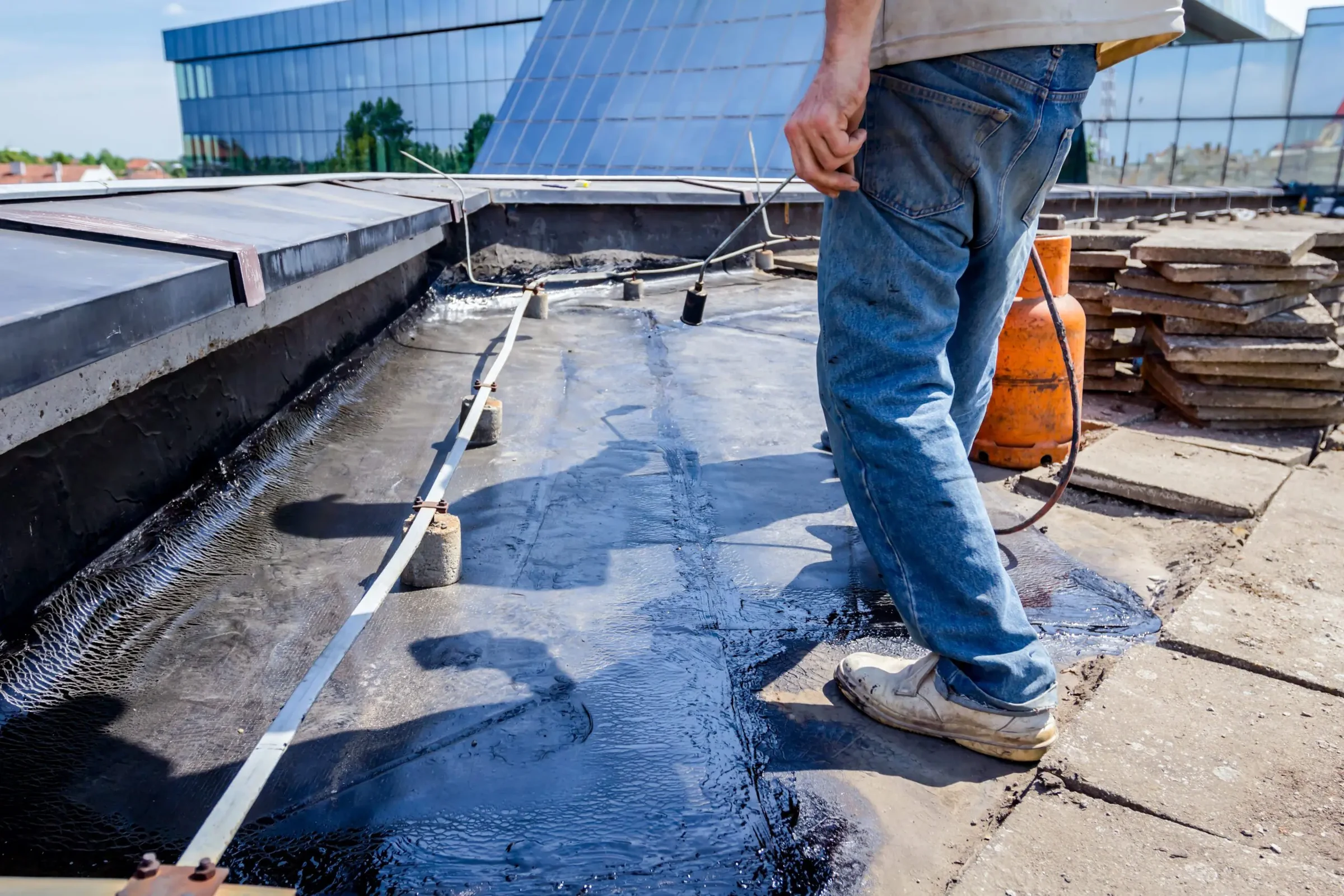
Modified Bitumen SBS Roofing in Fayetteville, NC
SBS modified bitumen for older Fayetteville commercial buildings with complex roof geometry. Application methods, multi-ply redundancy, and fire-safe options.
Modified Bitumen SBS Roofing in Fayetteville, NC
SBS modified bitumen for older Fayetteville commercial buildings with complex roof geometry. Application methods, multi-ply redundancy, and fire-safe options.
SBS Modified Bitumen for Complicated, Older Roof Geometry
A lot of the commercial building stock around downtown Fayetteville and older districts like Massey Hill and Bonnie Doone wasn't designed with a single clean rectangle of roof - additions, mechanical penthouses, and decades of patch repairs left behind roofs with more penetrations, transitions, and odd angles than a typical suburban retail box. SBS modified bitumen handles that complexity better than most single-ply membranes, which is why it's still the right call on a meaningful share of the reroofs we bid downtown.
What SBS Actually Is
Styrene-butadiene-styrene modified bitumen is asphalt blended with a rubber polymer that gives the sheet real elasticity instead of the brittleness of older built-up asphalt systems. That rubberized asphalt moves with a building through thermal cycling and minor structural settling far better than straight asphalt did, while keeping the multi-layer redundancy that's always made bitumen systems forgiving on roofs with a lot of tie-ins and flashing detail.
Most SBS systems go down as at least two plies - a base sheet and a cap sheet - which means the roof has two full layers of waterproofing working together rather than a single membrane plane. On a roof with dozens of penetrations from decades of added equipment, that redundancy is worth more than it sounds.
Application Methods, and Why We Don't Default to Torching
SBS can go down torch-applied, hot-mopped with kettle asphalt, cold-adhesive applied, or self-adhered, and the method matters as much as the membrane choice itself. Torch application is common in the industry, but it introduces open flame directly against a roof deck on a building that's often still occupied below - a real risk on older buildings with unknown deck conditions or combustible materials near the roof edge.
On occupied downtown storefronts and mixed-use buildings, we lean toward cold-adhesive or self-adhered SBS specifically to take open flame out of the equation. It costs a bit more in labor time than torching, but it removes a fire risk that has no upside for the building owner once you account for what a roof fire actually costs versus what torching saves.
Where Multi-Ply Redundancy Pays Off
Hail and wind-driven rain both find weaknesses in a roof faster than steady weather does, and a multi-ply SBS system gives wind-driven rain more material to work through before it reaches the deck, compared to a single-ply membrane where one puncture or seam failure is the only thing standing between the field and the insulation below. On buildings that have taken hail damage before, or sit exposed with limited parapet protection, that layered redundancy earns its keep as a genuine performance advantage rather than a selling point.
Granulated Cap Sheets and Heat Performance
Cap sheets come in granulated finishes ranging from standard gray to reflective white granules, and the choice affects how much solar heat the roof absorbs through a Sandhills summer. A granulated surface also adds a layer of UV protection over the bitumen itself, which extends service life on a roof that's going to sit in direct sun for twenty-plus years. We talk owners through granule color the same way we'd discuss membrane color on a single-ply system - it's a genuine performance choice as much as an aesthetic one.
Where We Still Spec SBS Locally
- Older downtown and Hay Street district buildings with complex roof transitions
- Mixed-use buildings with multiple additions and inconsistent deck history
- Roofs with a documented history of hail damage or wind-driven leaks
- Buildings where fire-safe cold-adhesive application is required by occupancy or insurance
- Parapet-heavy roofs with extensive flashing detail around HVAC penthouses
Keeping Storefronts Open During a Cold-Applied Reroof
Downtown storefronts generally can't close for a reroof, so cold-adhesive SBS work gets sequenced section by section, with adhesive odor and application timed for hours when foot traffic through the block is lightest. We coordinate with tenants on delivery access and sidewalk use before mobilizing, because a downtown block has a different logistics problem than a suburban parking lot - there's often no staging area beyond what the street itself allows.
On mixed-use buildings with residential units above ground-floor retail, we also plan around when those upper units are typically empty during the day, minimizing how much of the work residents notice at all.
Frequently Asked Questions on SBS Modified Bitumen
Is cold-adhesive SBS as durable as torch-applied?
Yes, when installed correctly. The waterproofing performance comes from the membrane and the bond quality, not the heat source used to achieve that bond. Cold adhesive removes fire risk without giving up long-term performance.
Can SBS be installed over an existing built-up roof?
Sometimes, if the existing system is dry and structurally sound, though we always verify with core cuts before recommending a recover over full replacement on older roofs with unknown repair history.
How does SBS compare to single-ply on a building with a lot of rooftop equipment?
SBS's multi-ply redundancy tends to hold up better around dense penetration counts, though a heavier single-ply option like 80-mil TPO can also perform well depending on the specific detailing involved.
Does granule color affect warranty terms?
Warranty terms are generally tied to membrane thickness and installation method rather than granule color, though reflective granules can matter for energy code compliance on some projects. We check the applicable requirement before finalizing the spec.
How often does an SBS roof need inspection?
Annual inspection is typical, with additional checks after major hail or wind events. Catching a small flashing failure early is far cheaper than letting water find its way into an older building's deck structure.