
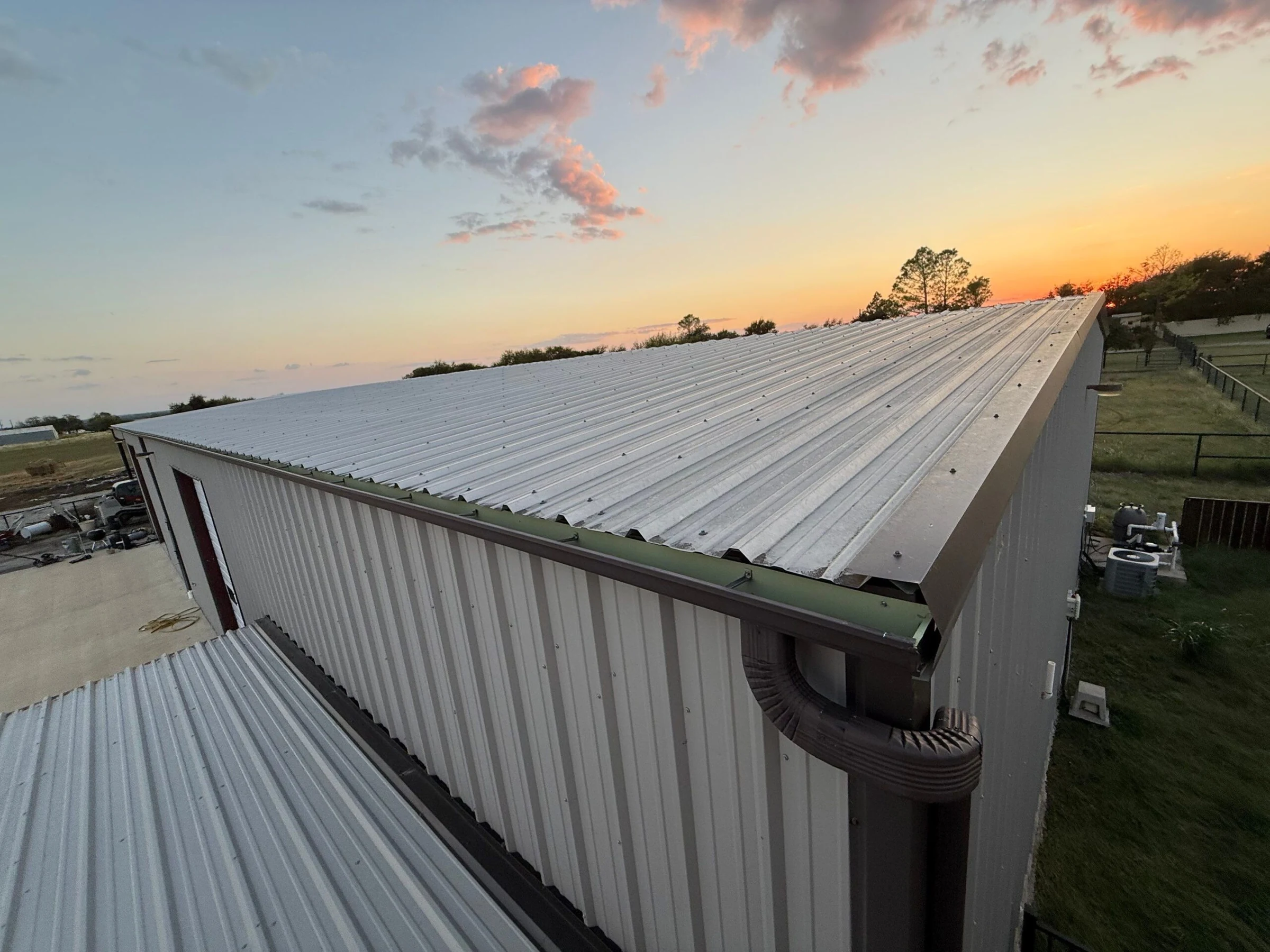
Metal R-Panel Roofing in Fayetteville, NC
R-panel metal roofing for Fayetteville-area distribution and warehouse buildings along I-95, installed and repaired by bay without stopping dock traffic.
Metal R-Panel Roofing in Fayetteville, NC
R-panel metal roofing for Fayetteville-area distribution and warehouse buildings along I-95, installed and repaired by bay without stopping dock traffic.
R-Panel Metal on the Warehouses That Keep the I-95 Corridor Moving
R-panel is the economical answer for the wide-span warehouse and distribution buildings that line I-95 through Dunn, Benson, St. Pauls, and Lumberton. We install and repair exposed-fastener R-panel roofs on the buildings where square footage matters more than architectural finish.
Why R-Panel Fits Distribution and Industrial Buildings Here
Warehouses and trucking terminals along the I-95 corridor need a roof that covers a lot of clear-span area economically, and R-panel does that without the cost of a standing seam concealed-fastener system a school or government building might specify instead. These buildings don't need architectural sightlines. They need a roof that sheds water, resists wind, and doesn't take the facility offline for a lengthy install.
The panel's ribbed profile also handles the wide thermal swings this region sees between summer heat and winter cold better than a flatter profile would, since the ribs give the metal room to expand and contract without buckling.
Trucking terminals and cold storage buildings around Lumberton's I-95/I-74 junction also lean on R-panel for the same reason: a large, simple roof shape with few obstructions is exactly the kind of field this system installs fastest and most economically on.
Installing Over an Active Distribution Facility
A distribution center doesn't stop trucks moving through its dock doors because there's a crew on the roof. We section R-panel installs and repairs by bay, tied directly to which dock doors are scheduled for inbound and outbound freight that day, and we keep crane and material staging clear of the yard areas trucks use to maneuver. If a facility runs a night shift for receiving, we schedule the loudest panel work, cutting and fastening, around that shift rather than through it.
For roof repairs following storm damage, we prioritize dried-in coverage over cosmetic completion, getting a section watertight fast even if the final trim and closure work happens on a later visit, because product sitting under an open roof is the real cost to the facility, not how quickly the whole job wraps.
We keep a running list of active dock assignments during multi-day jobs so the crew always knows which bays shift from active freight to roof access as the schedule moves through the week, rather than relying on a static plan set at the start of the project.
Exposed Fasteners and What That Means for Maintenance
R-panel's exposed fastener system costs less to install than concealed-fastener standing seam, but it means more maintenance touchpoints over the roof's service life. Fastener washers age and can back out or fail well before the panel itself does, and that's the first thing we check on any R-panel maintenance visit or repair call, especially on roofs that have been through several hurricane-remnant wind events.
A rescrew and reseal pass on a fastener population that's showing early wear costs a fraction of a leak repair over active inventory, and it's the maintenance item facilities managers most often defer until it becomes a bigger problem than it needed to be.
What We Check Before Recommending R-Panel Work
- Fastener condition across the whole field, beyond the obvious leak points
- Panel-to-panel lap condition and sealant life at the laps
- Purlin spacing and structural capacity for the panel gauge in use
- Drainage at valleys, gutters, and downspout discharge points
- Rust or corrosion at cut edges and panel terminations
- Wind exposure category given the building's height and open surroundings
Most R-panel leaks trace back to fastener or lap sealant failure rather than a hole in the panel itself, which is why we check those details first on every call.
Hurricane-Remnant Wind and Exposed-Fastener Panels
Sustained wind from remnant storms tests fastener holding power at the eaves and ridge before it tests the panel field, particularly on the tall, open-span warehouse buildings common along I-95. This region's memory of Matthew and Florence includes plenty of R-panel roofs that lost fasteners at the perimeter without losing panels outright, and that's exactly the failure mode we check for first after any major wind event.
Downspout Discharge Into Sandy Soil
The Sandhills' deep sandy soil drains fast once water reaches the ground, which takes pressure off downspout and scupper discharge points compared to areas with heavier clay soil. That doesn't reduce how much attention the roof-side drainage needs, but it does mean grading and discharge point design around these warehouse buildings has more margin for error than it would in a slower-draining region.
Questions About R-Panel Roofing
Can you repair R-panel without shutting down our dock doors?
Yes. We section repairs by bay and coordinate with your dock schedule so active doors stay in use.
Why does our R-panel roof leak at the fasteners instead of the panels?
Exposed fasteners age and their washers fail before the panel metal typically does. That's the first thing we check on any leak call.
Does R-panel hold up to the wind we get from hurricane remnants?
With sound fastener condition and correct spacing for the building's exposure, yes. Aging fasteners are the weak point we watch for after storm events.
How does R-panel compare in cost to standing seam for a warehouse?
R-panel is typically less expensive upfront, which is why it's common on distribution buildings where architectural finish isn't a priority.
How often should fasteners be checked on our warehouse roof?
At least annually, with an added check after any major wind event given how much of this region's storm exposure comes through remnant systems.