
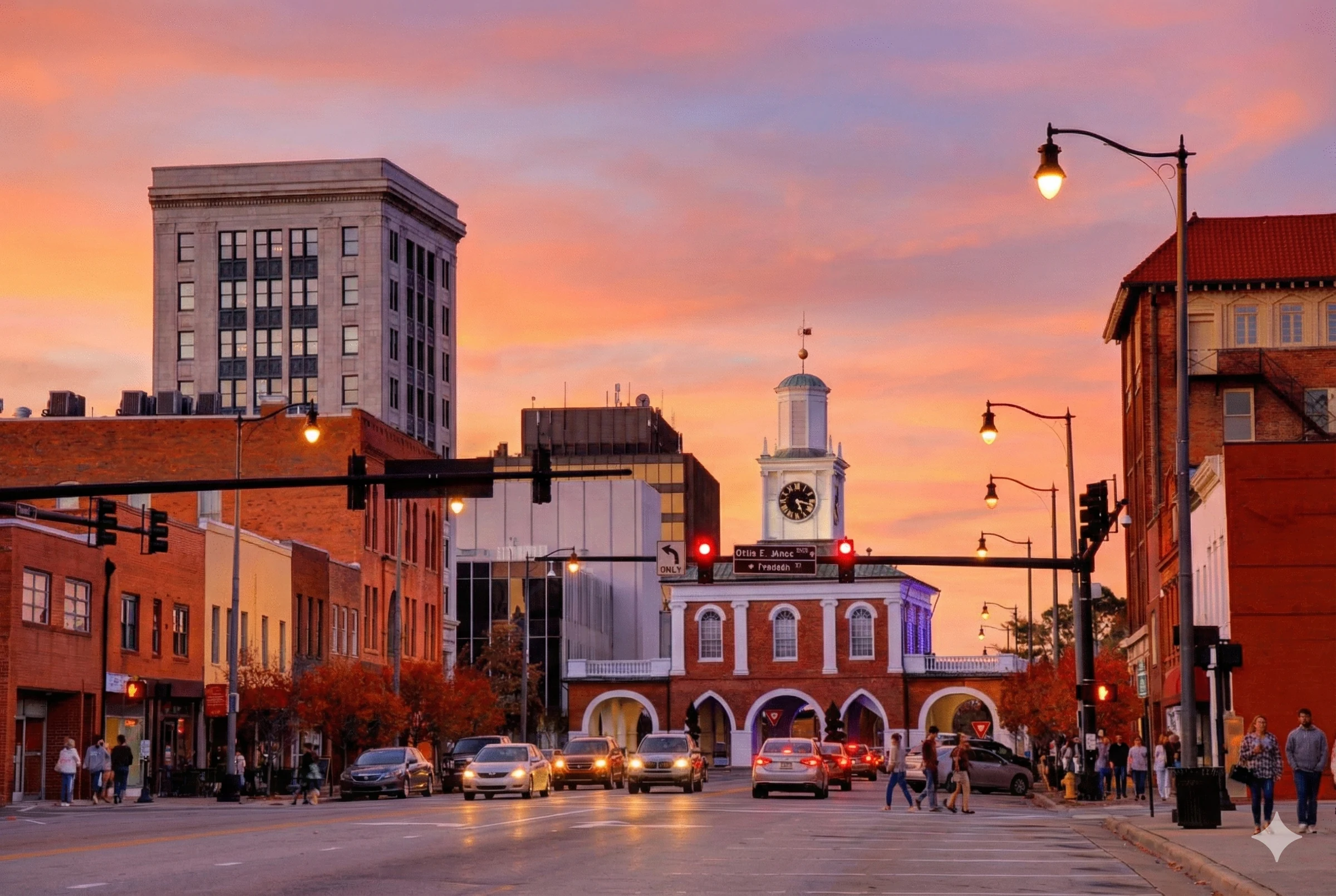
Commercial Roofing Contractors Clinton, NC
Commercial roofing contractors serving Clinton, NC with commercial roof repair, replacement, coatings, maintenance programs, inspections, and documented roof reports.
Commercial Roofing Contractors Clinton, NC
Commercial roofing contractors serving Clinton, NC with commercial roof repair, replacement, coatings, maintenance programs, inspections, and documented roof reports.
Commercial Roofing Contractors Clinton, NC
Commercial roofing contractors serving Clinton, NC with commercial roof repair, replacement, coatings, maintenance programs, inspections, and documented roof reports.
Commercial Roofing Contractors Clinton, NC
Commercial roofing contractors serving Clinton, NC with commercial roof repair, replacement, coatings, maintenance programs, inspections, and documented roof reports.
Commercial Roofers in Clinton
For commercial properties in Clinton, the defensible choice between repair, restoration, and replacement starts with roof-system condition, moisture findings, drainage performance, and remaining service life. Clinton is a Sampson County processing town first, and its commercial roof stock reflects that directly. Prestage Foods and the poultry processing operations built up around it dominate the industrial side of the local economy, backed by a smaller base of ag-service and county-seat retail buildings downtown.
Poultry Processing Plant Roofs
Processing plant roofs carry a load profile unlike almost any other commercial building type we work on. Heavy exhaust and ventilation equipment runs constantly to manage odor and humidity from processing operations below, refrigeration and cold storage sections need consistent envelope integrity to hold their temperature range, and wash-down sanitation inside the building puts moisture pressure on the roof deck from underneath as well as from weather above. We check ventilation curb flashing and refrigeration section seams with more attention here than on a standard warehouse, since a failure in either area affects production directly rather than just building condition.
Ammonia and moisture-heavy air inside a processing facility can also be harder on certain roofing materials over time than a typical industrial atmosphere, so material selection on these buildings gets weighed against what's actually venting up through the roof assembly rather than against cost and standard specifications alone.
Production Schedules That Don't Pause
Poultry processing runs on tight production schedules with real financial consequences to unplanned downtime, and a roof leak over a cold storage or processing area is not something a plant manager can wait out. We plan tear-off and replacement in sections that avoid interrupting active processing lines, and we keep emergency response capacity ready specifically for these facilities, since the cost of a delayed repair here compounds faster than it would on a retail building.
Sampson County's Broader Ag-Commercial Base
Beyond the processing plants themselves, Clinton and the surrounding county carry a real base of agricultural service buildings: grain and feed operations, equipment dealers, and the county-seat retail and office stock downtown that serves the broader farming community. These buildings run older roof systems more often than the processing plants, since ag-service construction here has moved more slowly than industrial expansion. We see a fair amount of built-up and older modified bitumen roofing still in service on this side of Clinton's commercial base.
- Ventilation and exhaust curb flashing for active poultry processing lines
- Cold storage and refrigeration section seam and envelope checks
- Phased roof replacement that avoids interrupting production schedules
- Recover and overlay evaluation for older ag-service and downtown buildings
- Material selection review for high-moisture, high-ammonia roof environments
- Emergency response staging for processing facilities during storm season
Downtown Clinton's Older Commercial Stock
The county-seat core around the courthouse still carries a number of older brick commercial buildings with flat or low-slope roofs added or modified over the decades. These don't see the same production-driven urgency as the processing plants, but they come with their own complications, usually multiple roof-age layers stacked from past renovations and parapet or cornice detailing that needs careful flashing work to keep water from finding its way behind the building's original masonry.
Odor Control Equipment and Roof Access
Processing plants of this type often run dedicated odor and emissions control equipment on the roof, separate from standard HVAC, and that equipment adds its own set of curbs, ductwork penetrations, and access walkways that a standard roof inspection can easily overlook if it isn't specifically looking for them. We map this equipment separately from the general roof field during inspection, since a leak starting at an odor-control duct penetration can travel along ductwork before showing up as a ceiling stain far from the actual source, making it harder to diagnose without knowing the equipment layout going in.
Walkway pads and access routes built for maintenance staff servicing this equipment also take a beating over time, and a worn walkway pad left unaddressed can start abrading the membrane underneath it rather than protecting it the way it's meant to. We check pad condition on every visit to a processing site for this reason, since it's an easy detail to miss on a quick visual pass from ground level.
Questions Clinton Processing Facility Managers Ask Us
Can you inspect our plant without stopping the processing line?
Yes. We sequence inspection and repair work around active production zones and coordinate timing directly with plant management.
Does the ammonia and moisture from processing affect roofing material choice?
It can. We factor what's actually venting through the roof assembly into material recommendations rather than defaulting to a standard industrial spec, since the wrong membrane in a high-moisture, high-ammonia environment can degrade faster than its rated service life would suggest.
How fast can you respond if we have an active leak over cold storage?
We treat that as an emergency call given the temperature and product risk involved, and we keep response capacity staged for facilities like this during storm season specifically.
Our downtown building has several layers of old roofing. Can it still be recovered?
Sometimes, but we scan for trapped moisture and check how many layers are already there before recommending another overlay instead of a full tear-off.
Do you work with ag-service buildings that don't run production schedules?
Yes, and those jobs are usually simpler to schedule since there's more flexibility than on an active processing facility, though the buildings themselves often need careful attention to old parapet and cornice flashing and sometimes a full moisture scan before we can even estimate the job accurately.