
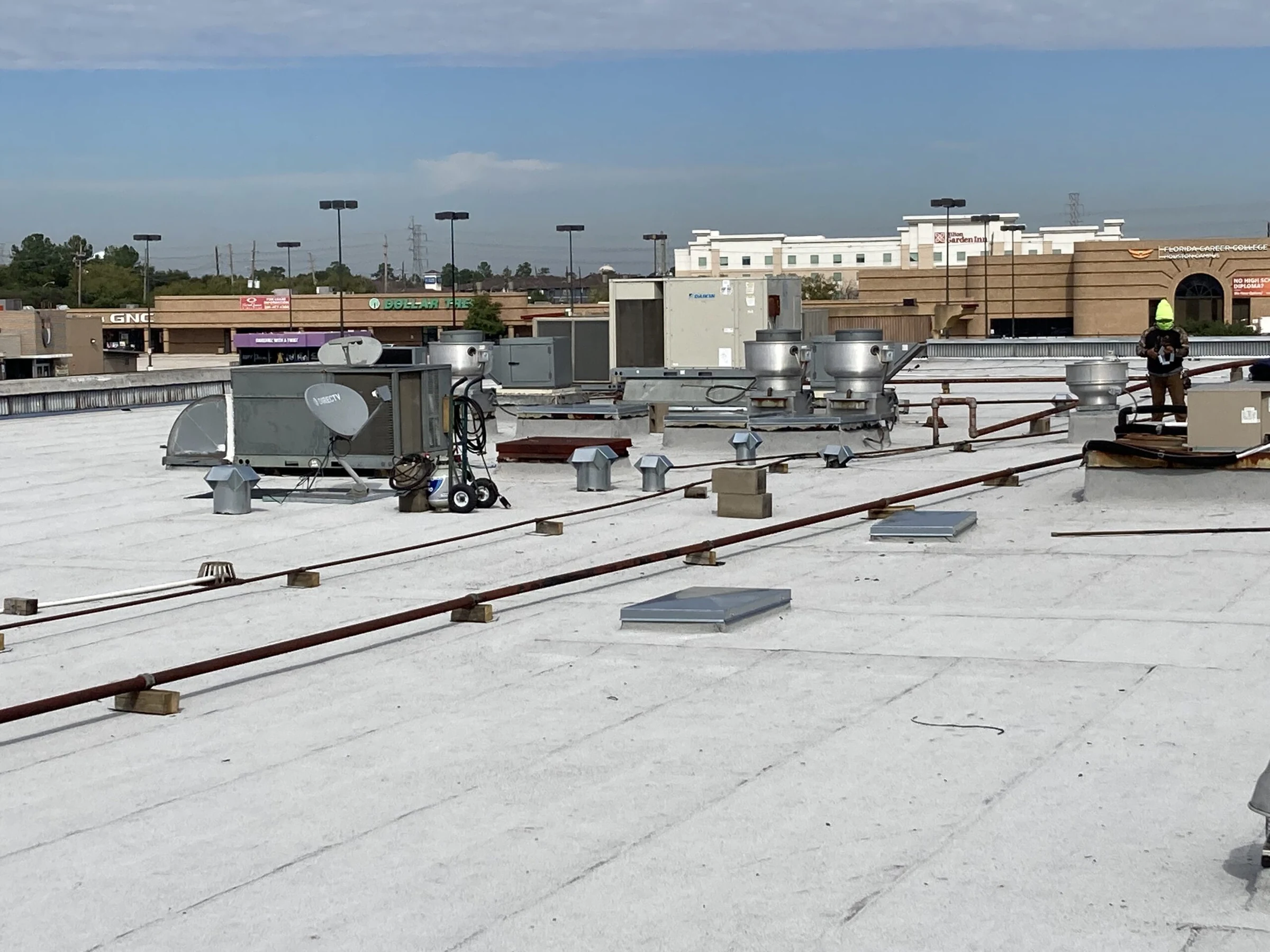
School & Campus Roofing in Fayetteville, NC
Roof replacement and repair for Cumberland County Schools, Fayetteville State, Methodist University, and FTCC, scheduled around the academic calendar.
School & Campus Roofing in Fayetteville, NC
Roof replacement and repair for Cumberland County Schools, Fayetteville State, Methodist University, and FTCC, scheduled around the academic calendar.
Roof Projects Scheduled Around the School Calendar
Cumberland County Schools, Fayetteville State, Methodist University, and Fayetteville Technical Community College all run on a calendar that has real windows for roof work and real windows where a crew on the roof creates a problem. We plan the work around that calendar, not around our own convenience.
Summer Break Is the Window, But It's a Short One
Most K-12 roof replacement in Cumberland County Schools happens in the ten or eleven weeks between the last day of school and the first day back, which means the scheduling window is fixed and every other district and contractor in the region is competing for the same weeks. We lock in material orders and crew scheduling early in the spring so a summer project doesn't slip into the first week of the new school year.
Higher-ed campuses like Fayetteville State, Methodist, and FTCC have more flexibility since buildings aren't uniformly empty over the summer. Some academic buildings sit quiet while dorms, dining halls, and summer session classrooms stay active. We scope those campuses building by building rather than assuming one calendar applies everywhere.
When a K-12 roof can't wait for summer, an active leak mid-semester, we treat it as an occupied-building project: after-hours and weekend work only, with the building fully secured and inspected before students and staff return Monday.
Fayetteville State's academic calendar and FTCC's overlapping short-term and full-term sessions rarely line up on the same empty week, so a roof project spanning both institutions' buildings, on the rare project that does, gets scoped around whichever calendar is tighter rather than assuming both campuses go quiet at once.
What's Actually on These Roofs
Cumberland County school buildings range from decades-old brick schools with built-up roofs long past their design life to newer additions with single-ply membranes still under warranty. A single campus can carry three or four different roof ages and systems depending on when each wing was added.
Gymnasiums and cafeterias carry different structural and drainage demands than classroom wings, larger clear spans, different roof drains, and in a lot of cases, the oldest section of the building because gyms and cafeterias get added onto rather than replaced.
Campus buildings at FTCC and the university campuses often include specialized spaces, labs, athletic facilities, performance venues, where roof penetrations for exhaust or mechanical equipment are denser than a typical classroom building, and we plan curb and flashing work around what's actually running underneath.
Cumberland County Schools has added a significant number of portable and modular classrooms across the district as enrollment has grown, and those units carry their own smaller roof systems that need the same inspection attention as a permanent building roof even though they're easy to overlook on a district-wide condition survey.
- Classroom wing roof replacement scheduled for summer break
- Gymnasium and cafeteria large-span roof sections
- Administrative building roofs on a separate maintenance track
- Dormitory and dining hall roofs with year-round occupancy
- Lab and specialized-space roof penetrations
- Portable and modular classroom roof maintenance
Safety and Access on an Active Campus
A roof crew working near an occupied school building means fall protection and site perimeter control are non-negotiable even for a short repair, not only a full reroof. We fence and mark staging areas so students and visitors never have a reason to walk under active work.
Material delivery and dumpster placement gets planned around drop-off and pickup traffic patterns specifically. A truck blocking a bus lane at 7:45 in the morning is a problem we plan to avoid, not one we solve after it happens.
Athletic facilities add their own access wrinkle: a football stadium press box or field house roof often needs to be scheduled around a fall sports season that runs concurrent with the first weeks back from summer break, so a project that seemed to have the whole summer to work with can lose its last two or three weeks to game-day prep.
Documentation for District Facilities and Capital Planning
Cumberland County Schools facilities staff manage roof conditions across dozens of buildings on a capital improvement plan that spans years, not one project at a time. We provide condition assessments formatted for that kind of multi-year planning: remaining service life, repair-versus-replace comparisons, and photo records tied to each building.
We also flag roof sections nearing the end of a manufacturer's warranty period specifically, since a district that catches a warranty-eligible repair before the warranty lapses saves a real cost that a district catching the same issue a year later would have to absorb entirely out of its own maintenance budget.
For storm-damaged school roofs, we document the same way we would for any commercial building: photos, moisture readings, a written scope, without promising a specific insurance or claims-related outcome.
Questions From District and Campus Facilities Staff
Can a full roof replacement realistically happen in a single summer break?
For most single-wing or single-building projects, yes, if material orders and scheduling lock in during the spring. Larger multi-wing campuses sometimes require phasing across more than one summer.
How do you handle an urgent leak during the school year without disrupting classes?
We schedule the loudest and most disruptive work for after school hours, evenings, or weekends, and secure the work area fully before students return the next school day.
Do university and community college campuses get scheduled differently than K-12 schools?
Yes. Higher-ed buildings often stay partially occupied year-round, so we scope those campuses building by building instead of assuming a single summer-only window.
What documentation do you provide for a district's capital improvement plan?
Condition reports with remaining service life estimates and repair-versus-replace cost comparisons, formatted so facilities staff can carry them directly into district budget planning.
How do you keep students safe around an active roof project?
Fenced and marked staging areas, delivery timing planned around drop-off and pickup traffic, and fall protection protocols that apply even to short repair visits, not only full reroofs.