
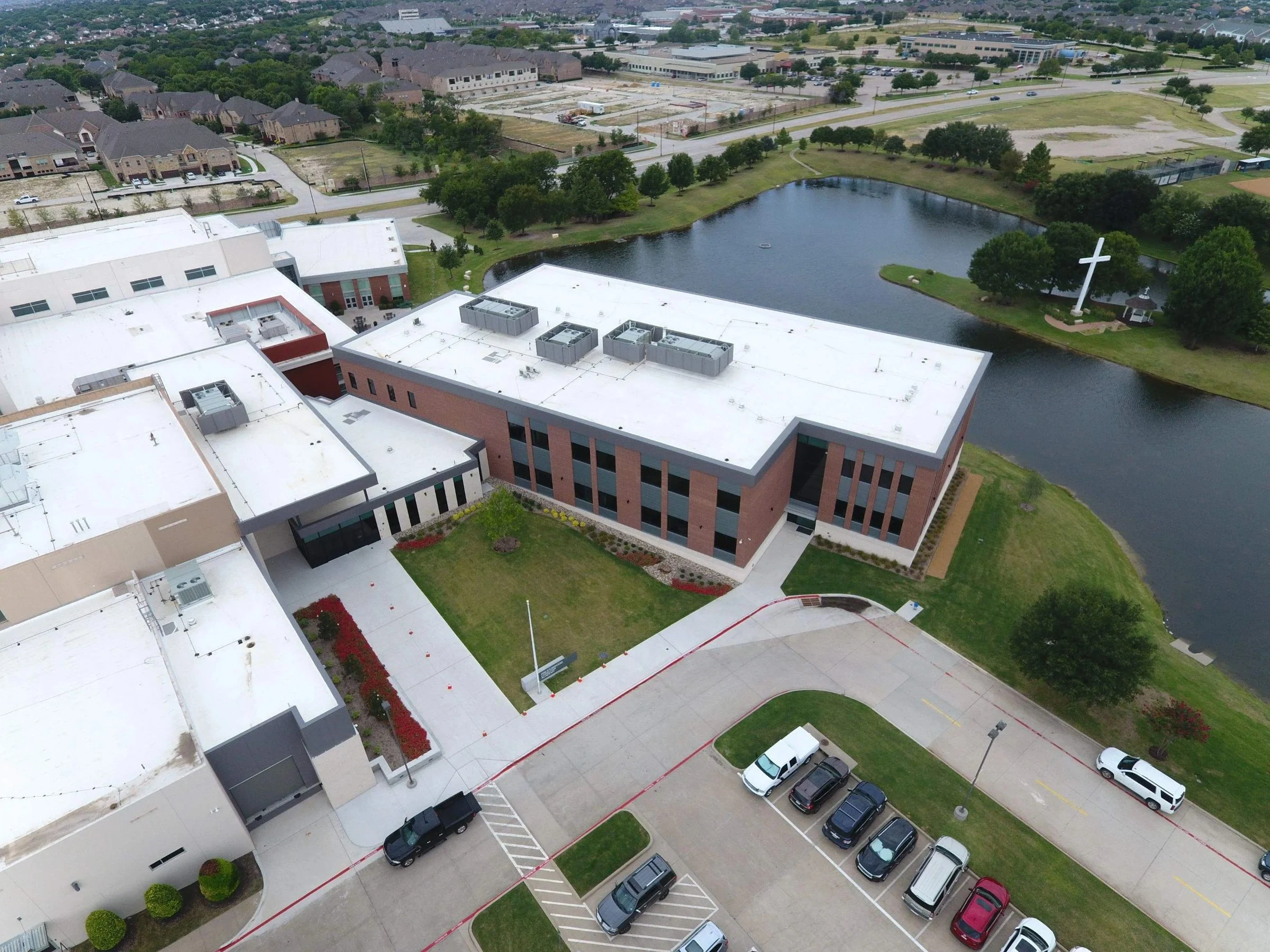
K-12 School Roofing in Fayetteville, NC
K-12 school roofing in Fayetteville, NC: summer-window scheduling, classroom noise control, and gymnasium roof drainage for Cumberland County school buildings.
K-12 School Roofing in Fayetteville, NC
K-12 school roofing in Fayetteville, NC: summer-window scheduling, classroom noise control, and gymnasium roof drainage for Cumberland County school buildings.
Fitting Roof Projects Into the School Calendar
Cumberland County Schools runs one of the larger districts in this part of the state, and most of its buildings are older flat-roof construction that's due for attention on a rolling basis. School roofing here isn't really about the roof system alone, it's about fitting the work into a calendar that has almost no flexibility once the year starts.
Summer Break as the Primary Construction Window
The stretch between the last day of school and the first day back is the obvious window for major roof work, and it's also the window every other school in the district is trying to use at the same time. We plan school roof projects well ahead of summer so material orders, crew scheduling, and inspections are lined up before the window opens, rather than scrambling once buses stop running for the year.
When a project can't fully finish in one summer, we sequence it so the completed sections are fully weathertight and safe well before students return, with any remaining work isolated from student areas.
Working Around an Occupied Building During the School Year
Not every school roof problem can wait for summer, and emergency repairs or smaller phased work sometimes has to happen while classes are in session. We schedule the loudest work during non-instructional hours where possible and keep crews and equipment away from bus loops, pickup lines, and playground areas during arrival and dismissal.
We also coordinate directly with the school's front office on any day we're on site during the school year, since a fire drill or a lockdown drill can change access requirements for our crew with little notice, and staff need to know exactly where our equipment and materials are staged.
Gymnasium and Cafeteria Roofs With Wide Clear Spans
Gymnasiums and cafeterias in Cumberland County schools tend to have some of the widest clear-span roofs in the building, often older structural systems that weren't built with today's drainage standards in mind. We look closely at slope and ponding on these sections specifically, since a leak over a gym floor or cafeteria can put a whole program on hold rather than simply close off a hallway.
A wet gym floor also creates a liability concern beyond the roof repair itself, so we treat any active leak over a gymnasium as a priority call even outside the district's normal scheduling process for planned work.
- Elementary school classroom wings
- Middle and high school main buildings
- Gymnasium and athletic facility roofs
- Cafeteria and food service area roofs
- Administrative and central office buildings
- Bus garage and maintenance facility roofs
Noise Sensitivity Near Active Classrooms
A fastening gun or a tear-off crew directly over an active classroom makes it hard for a teacher to hold a lesson, so timing matters even during smaller, off-season repairs that happen while school is technically out but staff are still preparing for the year. We coordinate with facilities staff on which wings are occupied and when, adjusting our schedule around professional development days and staff-only weeks rather than assuming the whole building is empty just because students aren't there.
Testing weeks add another layer to that schedule, since standardized testing windows require an even quieter building than a normal instructional day, and a district facilities director will usually flag those dates for us well before we finalize a repair calendar.
Documentation for District Facilities Planning
School districts track roof condition and remaining life across dozens of buildings as part of long-term capital planning, and we provide inspection and project documentation formatted to feed into that kind of record-keeping, not merely a one-off invoice and photo set.
That format matters when a district is weighing repair against replacement across several aging buildings at once, since clear condition data lets facilities staff make the case for budget allocation with real information instead of a general sense that a roof is old.
Evaluating Older Roof Assemblies Before Tear-Off Begins
A number of Cumberland County school buildings date back several decades, and older roof assemblies sometimes include legacy materials or deck construction that needs a careful look before any tear-off begins, not merely a standard walk-on inspection. We evaluate the existing assembly layer by layer during the proposal stage so the district knows what's actually under the surface membrane before crews start pulling material, rather than discovering a complication mid-project.
That upfront evaluation also protects the district's timeline, since a surprise discovery on day one of a tight summer construction window can push a project past the date students return if it isn't caught early.
Growing schools in this district sometimes add portable classrooms or standalone modular buildings to handle enrollment that's outpaced the main building's capacity, and those structures carry their own separate roofs that age and wear differently than the permanent building. We evaluate portables as their own category during a district-wide assessment, since their lighter construction and lower rooflines often show leaks sooner than the main building even when they were installed more recently.
We also track portable roof condition separately in our reporting, since a district moving a portable unit from one campus to another benefits from knowing the roof's actual condition before it gets relocated rather than assuming it's fine simply because the building itself is being reused.
Questions School Facilities Directors Ask Us
Can a full re-roof actually finish in one summer?
Depending on the building's size, often yes, and when it can't, we sequence the work so completed sections are fully secure before students return.
How do you handle repairs that can't wait for summer break?
We schedule the loudest work outside instructional hours and keep equipment clear of bus loops and pickup areas during arrival and dismissal.
Do gym and cafeteria roofs need different attention than classroom wings?
Often yes, since their wide clear spans and older drainage design tend to show ponding issues classroom roofs don't have.
Can you work during teacher workdays before the school year starts?
We can, and we coordinate with facilities staff on which areas are occupied so noise doesn't disrupt staff preparation.
What kind of documentation do you provide for district capital planning?
Inspection reports and project records formatted to support long-term roof-condition tracking across multiple buildings, not merely a single job file.