
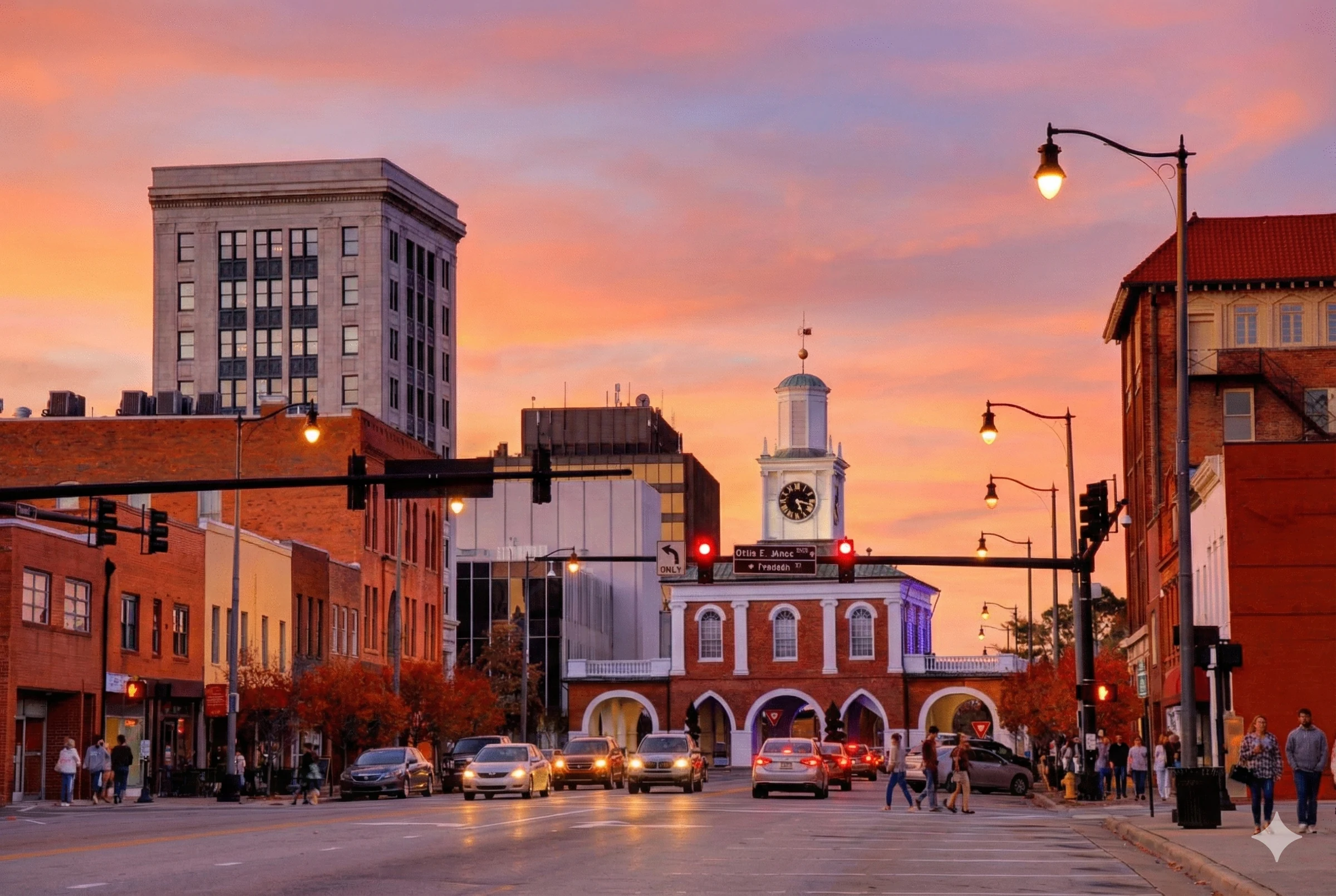
Commercial Roofing Contractors Hope Mills, NC
Commercial roofing contractors serving Hope Mills, NC with commercial roof repair, replacement, coatings, maintenance programs, inspections, and documented roof reports.
Commercial Roofing Contractors Hope Mills, NC
Commercial roofing contractors serving Hope Mills, NC with commercial roof repair, replacement, coatings, maintenance programs, inspections, and documented roof reports.
Commercial Roofing Contractors Hope Mills, NC
Commercial roofing contractors serving Hope Mills, NC with commercial roof repair, replacement, coatings, maintenance programs, inspections, and documented roof reports.
Commercial Roofing Contractors Hope Mills, NC
Commercial roofing contractors serving Hope Mills, NC with commercial roof repair, replacement, coatings, maintenance programs, inspections, and documented roof reports.
Commercial Roofers in Hope Mills
Commercial roofers serving Hope Mills should document leak sources, wet insulation, drainage, edge details, penetrations, and repair history before recommending a scope. Hope Mills has grown from a mill village into a retail and light-industrial suburb of its own, and its roof stock reflects both eras. We work the strip centers along Main Street and NC-59, the newer retail pads near the lake, and the light industrial buildings tucked into the town's older manufacturing footprint.
Main Street and the NC-59 Retail Corridor
NC-59 and the Main Street business district carry most of Hope Mills' retail and service commercial buildings, a mix of freestanding pads, small strip centers, and older buildings that have been re-skinned more than once. Roof stock here runs the gamut from newer TPO installs on rebuilt centers to modified bitumen and even some remaining built-up roofs on the town's oldest commercial buildings. That age spread means every job starts with an honest read of what's actually up there before we talk about repair versus replacement.
Strip centers on this corridor tend to share a tenant-turnover problem: each new business adds its own signage penetration, its own exhaust hood curb, its own rooftop unit swap, and none of it gets tied back into the original roof warranty. We find unsealed penetrations more often here than anywhere else in the market, simply because of how many small businesses have cycled through the same buildings.
Light Industrial Near the Old Mill Footprint
Hope Mills' name comes honestly from its mill history, and some of the light industrial and warehouse space near that old footprint still carries roof assemblies that predate current membrane standards. These buildings are smaller than a distribution warehouse but often have complicated rooflines from additions built onto the original structure over decades, which means more flashing transitions and more places for water to find a way in at a roof-to-wall junction.
We spend extra time on these transition points during inspection, because a straightforward TPO field can still fail at a poorly detailed tie-in to an older section of roof that was never designed to match it.
Lake Effect and Storm Runoff
Hope Mills Lake and the creek system feeding it mean this part of town sees real drainage pressure during heavy rain events, and commercial roofs near the lake need gutters, drains, and scuppers sized for fast runoff rather than a slow soak. We check downspout and drain capacity on every lakeside property, because standing water backing up onto a low-slope roof does more long-term damage than the same rain falling on a well-drained system.
- Re-sealing unsealed penetrations left by rotating retail tenants
- Flashing repair at roof-to-wall transitions on older light industrial additions
- Drain and scupper capacity checks on lakeside commercial properties
- Recover and overlay evaluation for aging built-up roofs on Main Street
- Storm inspection after heavy rain events tied to the creek system
- Preventive maintenance for strip centers with high tenant turnover
Deciding Between Recover and Full Replacement
A lot of Hope Mills' older commercial stock is at the point where the honest question isn't repair, it's recover versus tear-off. We look at deck condition, how much wet insulation is trapped under the existing membrane, and how many recover layers are already stacked up, because some of these roofs have been overlaid once already and can't take a second overlay without adding real weight the structure wasn't built for. We give owners a straight answer on that rather than defaulting to whichever option is easier to sell.
Moisture scanning matters more here than on newer builds, since a roof that's been recovered before can hide a soaked insulation layer under a membrane that still looks fine from above. We scan before quoting so an owner isn't paying for a cosmetic patch over a deck that's already failing underneath.
Small Business Turnover and Rooftop Equipment
Hope Mills' Main Street corridor turns over tenants more often than a shopping center leased mostly to a national chain, and every turnover is a chance for a new rooftop unit, a new sign, or a new exhaust vent to get added without anyone checking how it ties into the existing roof warranty. We ask property managers to loop us in before a new tenant's contractor gets on the roof, because the fastest way to void a roof warranty is a mechanical contractor cutting a new curb without flashing it to spec.
Questions Hope Mills Owners Ask Us
Our strip center has three different roof ages across connected units. Is that a problem?
It's common here and manageable, but it means we inspect each section separately rather than assuming uniform condition across the whole building. Repair plans often differ unit to unit.
Can our building take a second recover layer?
Sometimes, but not always. We check what's already stacked on the deck and the structure's load capacity before recommending another layer instead of a tear-off.
Why do we get leaks at the wall where our addition meets the old building?
That junction is rarely detailed to match either roof system cleanly. It's one of the most common failure points we find on Hope Mills' older light industrial buildings.
Does the lake actually affect drainage this far from the water?
Yes, for properties tied into the creek and storm drainage system feeding the lake. Runoff volume during heavy rain is higher here than on higher ground elsewhere in town.
How often should a Main Street retail roof get inspected?
At least once a year, plus after any tenant build-out that adds rooftop equipment, since that's when most penetrations here go unsealed.