
Commercial Reroofing in Fayetteville, NC
Full commercial reroofing in Fayetteville, NC — deck inspection, system selection, and phased installation timed around retail, hotel, and clinic operations that stay open.
Commercial Reroofing in Fayetteville, NC
Full commercial reroofing in Fayetteville, NC — deck inspection, system selection, and phased installation timed around retail, hotel, and clinic operations that stay open.
Full Reroofing for Fayetteville Buildings That Have Aged Past Repair
Somewhere between a repair ticket and a full tear-off, a roof crosses a line where patching stops making financial sense. We spend a lot of our time in Fayetteville telling owners exactly where that line sits on their building, then running the reroof so the business underneath keeps functioning.
Reading the Signs Before the Roof Reads Them to You
Recurring leaks in the same general area, membrane that has gone brittle and cracks when you walk it, seams that separate faster than we can reweld them — these are common signals across the strip retail and freestanding buildings along Skibo Road, Owen Drive, and the Cross Creek Mall corridor. Buildings from the late 1980s through the early 2000s are hitting the back half of their membrane life at the same time, which is why we are fielding more full-reroof calls than five years ago.
Utility bills climbing without an obvious cause are another tell. Wet insulation loses R-value fast, and a roof holding water in its substrate underneath a functioning membrane can be adding real dollars to a heating and cooling bill before a single drop shows up on a ceiling tile inside.
What We Check Before We Recommend Tear-Off
We do not quote a reroof off a windshield survey. Core samples cut in a few spots tell us whether insulation underneath the membrane is dry, saturated, or somewhere in between — and how many roof layers are already stacked up under the current surface. Local code limits how many layers can stay in place, so that number often decides the scope before we even talk system type.
We check deck condition at every core cut, look at drainage slope across the field, and note anything that changed the load path since the roof went on — added rooftop units, a new satellite dish, a solar array, anything else. A reroof is the one point in a building's life where all of that gets corrected at once instead of worked around one item at a time.
Membrane and System Choices for This Climate
Fayetteville summers push membrane surface temperatures well past 150 degrees on a black roof, and the humidity that sits over the Sandhills most of the year keeps seams under sustained moisture stress. White TPO and PVC membranes cut rooftop heat load and hold up well against that combination; heavier-gauge EPDM still makes sense on buildings where budget matters more than reflectivity. We walk owners through the tradeoffs on TPO systems versus the alternatives before anything gets ordered.
Standing seam and R-panel metal shows up more on canopies, mechanical screens, and outbuildings around here than on the main low-slope field, but where it fits, it holds fastening better through the wind gusts that trail hurricane remnants inland from the coast.
Keeping the Business Open While We Tear Off
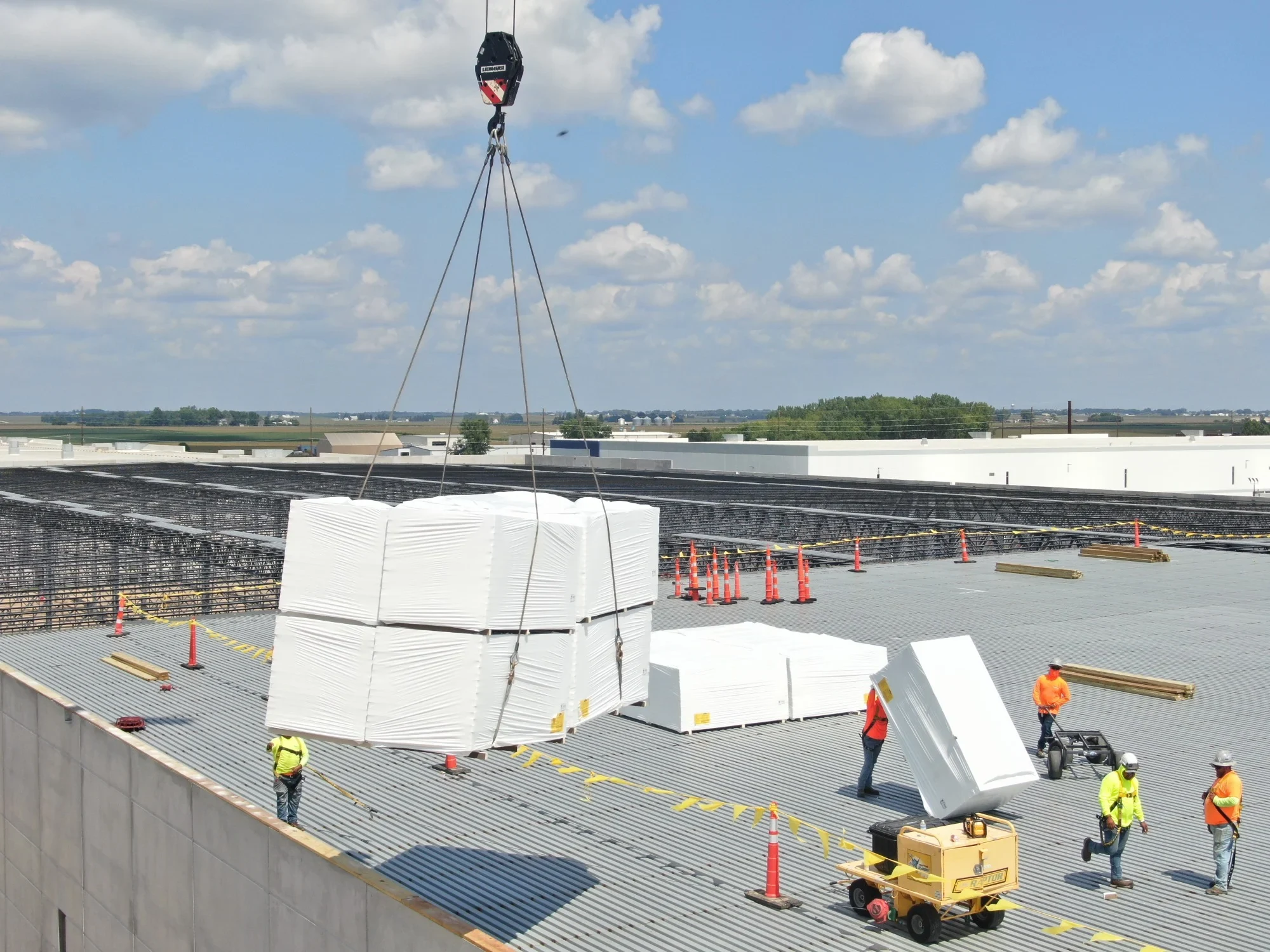
A hotel along the I-95 corridor does not get to close its rooms during a reroof, and a clinic on the healthcare belt around Fort Liberty does not get to stop seeing patients. We section the tear-off so only one part of the roof is open to weather at a time, dry that section in before the crew moves to the next, and stage material deliveries so a parking lot is not blocked during checkout hours or shift change.
For retail buildings, that means the loading side gets worked first and the customer-facing side gets sequenced around store hours whenever the schedule allows it. For anything tied to base-adjacent contract work, we coordinate around gate hours and any access restrictions before crews mobilize.
What's Actually Included in a Full Reroof
The scope on a true reroof is bigger than most owners expect the first time we walk it. A typical project includes:
- Full tear-off and disposal of the existing membrane and insulation layers
- Deck repair or replacement anywhere moisture reached the substrate
- New tapered insulation to correct or improve drainage slope
- New membrane system, fully adhered or mechanically fastened per the wind uplift spec
- New edge metal, coping, and flashing at every penetration and parapet
- Walkway pads at rooftop unit access paths
- Final inspection and manufacturer warranty documentation
Reroofing Questions We Get Most From Fayetteville Owners
How do we know if this is a repair job or a full reroof?
We look at how much roof area is actually affected versus isolated. If wet insulation or membrane failure shows up in more than one core sample location, patching it just moves the failure to the next spot instead of solving it. We will tell you straight if a repair still has legs left in it.
How long does a reroof take on a typical strip retail building?
A single retail bay in the 5,000 to 15,000 square foot range usually runs one to two weeks depending on weather windows and how much deck repair the core samples turn up. Larger anchor buildings and hotels run longer because we are sectioning the work to keep the building occupied.
Can you reroof in phases if we cannot close for any length of time?
Yes, and it is the more common approach for anything occupied — retail, hotel, medical office. We break the roof into sections sized to what we can tear off, insulate, and dry-in within a single work window, so nothing sits open overnight.
What happens to the old membrane and insulation once it's off?
It goes to disposal, hauled off site as it comes off rather than staged in a dumpster on your property for weeks. We keep the roof and the ground below it clear of debris through the whole tear-off.
Does a reroof affect our existing roof warranty?
A full tear-off and reroof typically resets the manufacturer warranty on the new system, which is one of the reasons a reroof often makes more long-term sense than another round of patch repairs on a membrane already near the end of its service life.