
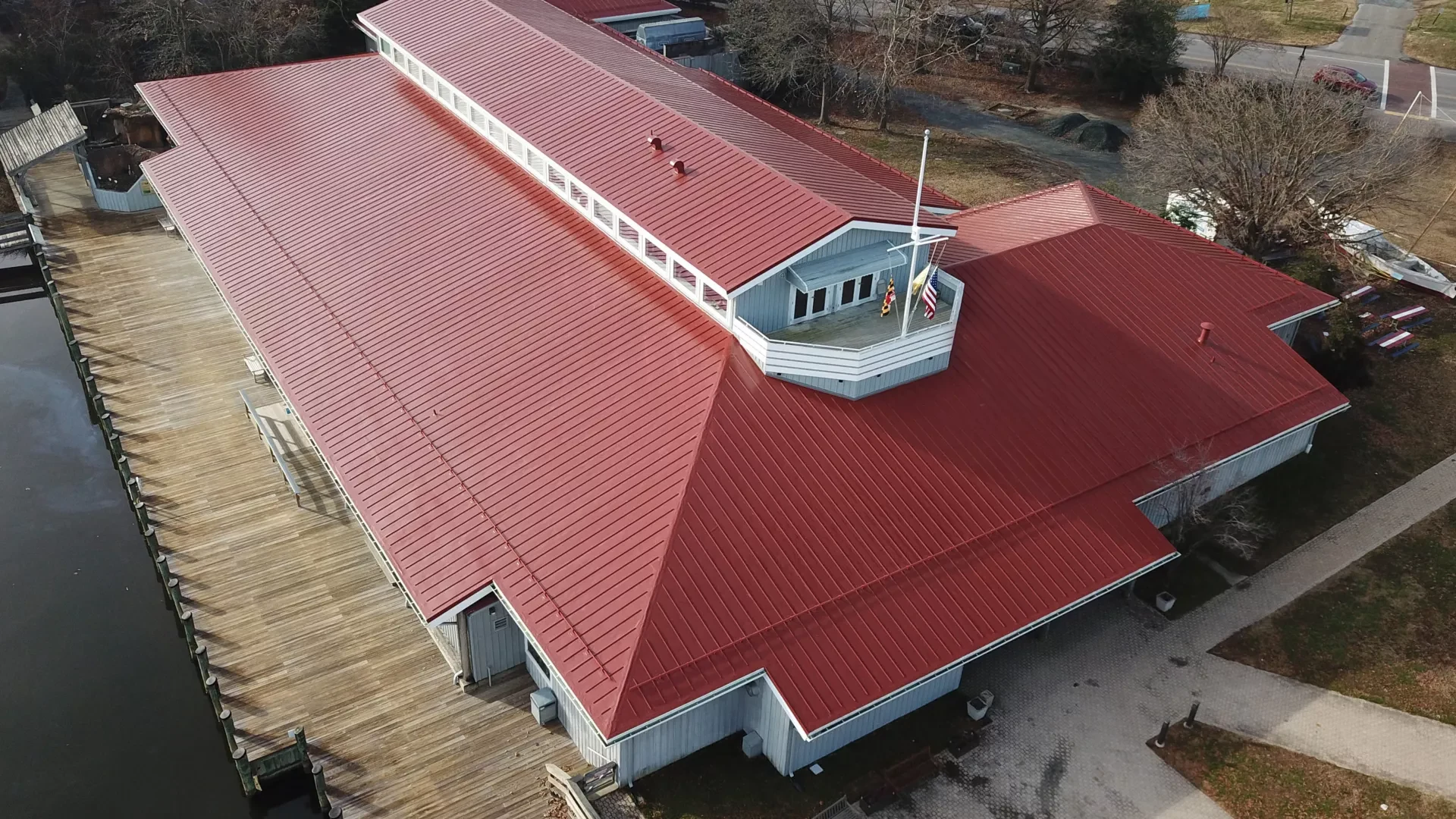
Sika Sarnafil PVC Roofing in Fayetteville, NC
Sarnafil PVC membrane for Fayetteville roofs needing chemical resistance, complex geometry, or green roof compatibility. Background and where it fits.
Sika Sarnafil PVC Roofing in Fayetteville, NC
Sarnafil PVC membrane for Fayetteville roofs needing chemical resistance, complex geometry, or green roof compatibility. Background and where it fits.
Sarnafil: a PVC Specialist With Roots Outside Standard Roofing
Sarnafil built its reputation as a PVC membrane specialist rather than a manufacturer covering every roofing system category, and that focus shows in how the product handles complex detailing, chemical exposure, and long field service. It's part of Sika, a global specialty chemicals and construction materials company whose core business runs deeper into waterproofing and concrete admixtures than roofing alone.
A PVC Specialist Backed by a Broader Waterproofing Company
Sika's business extends well beyond roof membrane into below-grade waterproofing, sealants, and concrete admixtures used across construction generally, which gives Sarnafil's roofing division access to a company-wide base of polymer and waterproofing chemistry expertise that a roofing-only manufacturer doesn't necessarily have in-house. That background is part of why Sarnafil's PVC formulations have a long international field record specifically around membrane flexibility and seam durability over time.
Long-Term Field Performance on Complex Roof Geometry
Sarnafil's hot-air welded PVC system handles complicated roof shapes and dense penetration counts well, which matters on the older, additions-heavy commercial buildings scattered through downtown Fayetteville and its surrounding districts. A membrane with a strong track record on architecturally complex roofs gives us more confidence detailing a building with a lot of odd angles, parapet transitions, and equipment curbs than a system with a thinner field history in that category.
Hot-air welded PVC seams also tend to be easier to verify in the field than adhesive-bonded seam types, since a probe test either confirms a fused seam or doesn't - there's less ambiguity around partial bond strength that can come up with tape or adhesive-based seaming on other membrane categories.
Where PVC Fits Grease and Chemical-Exposure Roofs Here
Sarnafil's PVC chemistry brings the same chemical-resistance advantages that make PVC membrane generally the right call on restaurant and grocery roofs downwind of kitchen exhaust, and on healthcare and manufacturing buildings with chemical fume exhaust from lab or process equipment. Where Sarnafil specifically earns consideration is on buildings where that exposure combines with complex roof geometry - a hospital with dense rooftop equipment and chemical exhaust points, for instance - since the membrane's welding performance around penetrations and its chemical resistance both matter at once.
Vegetative and Green Roof Compatibility
Sarnafil membrane has a long history of use under vegetative or green roof assemblies, where the waterproofing layer has to hold up under soil, plantings, and root exposure for decades without direct access for repair. That's a narrower use case in this market than standard commercial reroofing, but it's relevant on institutional or civic projects around Fayetteville where a green roof component gets considered as part of a larger renovation or new construction.
Root-resistant membrane formulation matters more on these assemblies than on a standard exposed roof, since a failure isn't discovered the way a leak on an open membrane usually is - by the time water shows up inside the building, soil and plantings have to be removed to even access the membrane for repair. That raises the stakes on getting the membrane spec and detailing right the first time.
- Restaurant and grocery roofs needing PVC's chemical resistance near kitchen exhaust
- Healthcare and manufacturing buildings with chemical fume exhaust from process equipment
- Older buildings with complex roof geometry and dense penetration counts
- Civic or institutional projects incorporating a vegetative or green roof component
- Buildings with an existing Sarnafil membrane needing repair or partial recover
What Sika's Broader Background Brings to a Roof Detail
Because Sika's business extends into structural waterproofing and sealants used well beyond roofing, we've found their technical documentation on tie-in and transition details - where a roof membrane meets a wall system, a below-grade waterproofing plane, or an unusual structural condition - tends to be more thorough than what a roofing-only manufacturer typically publishes. That's useful on buildings with unusual construction, which describes more than a few of the older properties around downtown Fayetteville.
Choosing Sarnafil for a Specific Building
As with any manufacturer, Sarnafil's PVC line gets weighed against the specific roof - whether the building's chemical exposure, geometry, or green roof requirements favor its particular strengths over another manufacturer's PVC or a different membrane category entirely. On some Fayetteville projects that comparison favors Sarnafil; on a standard low-complexity retail reroof, a different manufacturer's PVC or a TPO system may be the more cost-effective answer.
Questions on Sarnafil PVC Roofing
Is Sarnafil more expensive than standard commercial PVC?
Pricing varies by project scope and specific product line, and on straightforward roofs the cost difference against other quality PVC manufacturers is often modest. The comparison matters more on complex or specialty applications.
Does Sarnafil PVC handle ponding water well?
PVC generally tolerates incidental ponding reasonably well, though proper drainage design still matters more than membrane chemistry alone for long-term performance.
Can Sarnafil be installed over an existing EPDM roof?
PVC is not compatible with direct contact against EPDM due to plasticizer migration, so any recover situation switching membrane types needs a separator layer or full tear-off, the same consideration that applies across PVC manufacturers generally.
Is a green roof assembly significantly more expensive than a standard reroof?
Yes, typically, given the added structural, drainage, and growing-medium requirements involved. It's usually considered as part of a larger renovation or new construction budget rather than a like-for-like reroof comparison.
How do I know if my existing roof is a Sarnafil system?
Membrane markings and seam characteristics usually identify the manufacturer, and we can typically confirm it during a roof inspection if installation records aren't available.