
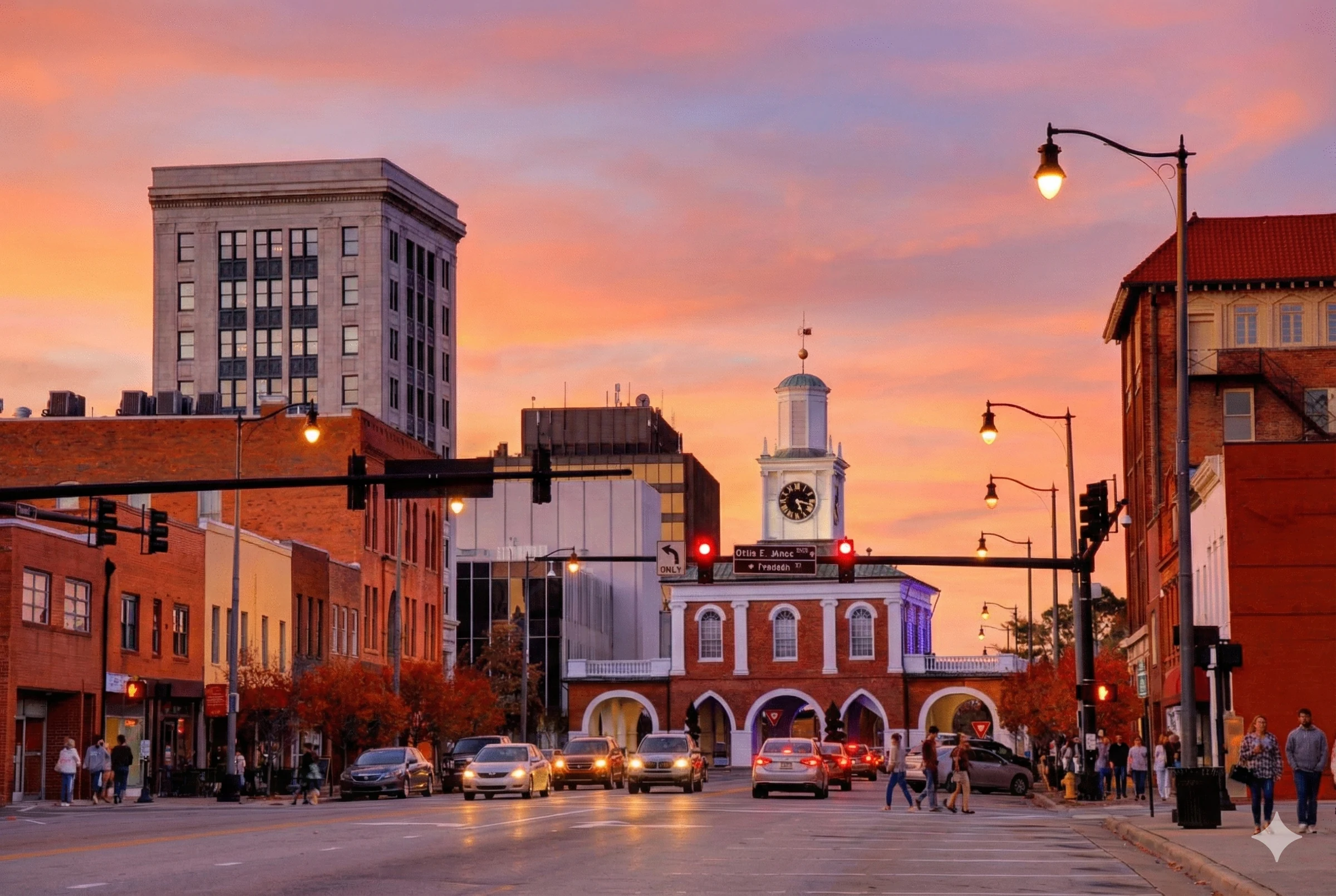
Commercial Roofing Contractors Erwin, NC
Commercial roofing contractors serving Erwin, NC with commercial roof repair, replacement, coatings, maintenance programs, inspections, and documented roof reports.
Commercial Roofing Contractors Erwin, NC
Commercial roofing contractors serving Erwin, NC with commercial roof repair, replacement, coatings, maintenance programs, inspections, and documented roof reports.
Commercial Roofing Contractors Erwin, NC
Commercial roofing contractors serving Erwin, NC with commercial roof repair, replacement, coatings, maintenance programs, inspections, and documented roof reports.
Commercial Roofing Contractors Erwin, NC
Commercial roofing contractors serving Erwin, NC with commercial roof repair, replacement, coatings, maintenance programs, inspections, and documented roof reports.
Commercial Roofers in Erwin
A practical commercial roofing plan for Erwin properties separates urgent leak control from repair, coating, maintenance, and replacement decisions supported by photos and condition findings. Erwin grew up around the Erwin Cotton Mills complex, which once produced denim shipped out to garment makers including Levi Strauss, and the roofline downtown still carries that history. Between the mill buildings, the newer light industrial park on the edge of town, and a short commercial strip on US-421, the roofing work here is a mix of adaptive reuse and straightforward metal building maintenance.
What's Actually Under a Sawtooth or Bowstring Truss Roof
The old mill structures near downtown Erwin were built with long-span timber or steel bowstring trusses and, in places, sawtooth monitor roofs designed to bring daylight into the weaving floors below. Whoever redevelops these buildings, whether for apartments, offices, or storage, inherits a roof structure that wasn't built to modern insulation and drainage standards.
We spend more time on assessment here than on a typical metal building, because the truss spacing, deck material, and decades of prior patchwork all affect what a new roof system can be fastened to. A standard mechanically-attached membrane sometimes isn't an option without deck reinforcement first.
Historic rehabilitation projects in Erwin can also qualify for state and federal historic tax credit programs, which is a real incentive for developers taking on the mill buildings, but those programs come with their own review process for anything visible from the exterior, including roof-mounted equipment and skylight replacements. We flag that early so a client isn't surprised by a design review requirement partway through construction.
Light Industrial Growth on the Edge of Town
Erwin's newer commercial growth is smaller pole-barn and metal-building construction on the outskirts, serving contractors, small manufacturers, and storage tenants who don't need downtown's older brick stock. These are simpler roofs to maintain, standing seam metal or exposed-fastener panel systems, but the fastener backout and sealant failure that comes with age still needs a regular eye.
We run preventive maintenance visits on these buildings on a schedule rather than waiting for a tenant to call about a drip, since a small metal building's owner rarely has staff walking the roof themselves.
A silicone or acrylic roof coating is often the most cost-effective move on a metal panel roof that's structurally sound but showing chalking and minor rust, buying years of additional life at a fraction of a full panel replacement. We test the existing coating and substrate condition before recommending it, since coating over active rust just hides a problem that keeps spreading underneath.
US-421 Commercial Strip
The retail and service buildings fronting US-421 through Erwin are modest in scale compared to Fayetteville proper, but they carry the same coastal-plain weather exposure: heavy summer thunderstorms, occasional hurricane remnant rain, and enough humidity to make ventilation and vapor management matter on any flat roof.
Because these buildings are small, owners often try to defer roof work longer than they should. We give straight answers about how much life is actually left before recommending a full replacement.
- Daylight visible through monitor roof glazing seals in older mill buildings
- Standing water pooling at low points on sawtooth roof valleys
- Exposed fasteners backing out on metal panel roofs
- Interior staining on exposed truss members below roof penetrations
- Gutter and downspout separation on older brick parapet walls
Redevelopment Projects Change the Roofing Math
When an old mill building gets converted to a new use, the roof scope often expands past what the new owner expected. Adding rooftop HVAC to a building that never had it means new penetrations through a deck that may not have been designed for concentrated loads, and historic preservation goals sometimes limit what can change on the exterior profile.
We work through these constraints early, before a contractor is locked into a construction schedule that assumes the roof is a simple line item.
We've also found that a lot of the surprises on these projects come from what's hidden above old suspended ceilings or behind later drywall additions, insulation that was added decades ago and never removed, abandoned conduit runs, framing modifications nobody documented. Opening up a section of ceiling before finalizing a roof scope saves a lot of change-order friction later in the project.
Erwin Roofing Questions We Hear Often
Can an old mill roof be recovered instead of replaced?
Sometimes, but it depends on the deck condition underneath decades of prior patching. We open test sections before committing to a recover strategy on any building this old.
How do you handle roofing on a building mid-renovation?
We coordinate directly with the general contractor's schedule so roof work lines up with framing and mechanical rough-in rather than becoming a bottleneck at the end of the project.
Do small metal buildings really need scheduled roof inspections?
Yes. A standing seam or exposed-fastener roof degrades slowly and quietly, and most small building owners don't have anyone checking it between tenant complaints. A yearly walk catches fastener and sealant issues while they're still cheap to fix.
What's the biggest roofing mistake you see in downtown Erwin?
Patching brick parapet and coping repeatedly instead of addressing the drainage problem causing the water intrusion in the first place. The patches buy a season, not a solution.
Do you handle both the historic buildings and the newer industrial park?
Yes, and we treat them differently. Adaptive reuse work gets a slower, more investigative approach; the newer metal buildings get a straightforward maintenance and repair track, and we're upfront with owners about which category their building falls into before any work starts.